
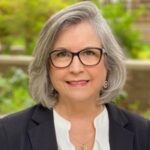

Dementia is a difficult illness, and so we need to think about what the church and dementia looks like. Jesus called us to love the least of these, just as he did. Today millions of people with dementia need our love in tangible ways. Ann McKinley provides understanding, encouragement and practical ideas in this conversation with Kelly Arabie of Beyond Ordinary Women Ministries.
If you missed it, our first conversation with Ann, “Learning about Dementia” is available on the BOW Podcast or on video.
This episode is available on video as well.
Recommended resources
Podcast: Play in new window | Download (Duration: 23:12 — 14.3MB)
Subscribe: Apple Podcasts | Spotify | Amazon Music | Android | Podchaser | Podcast Index | TuneIn | Youtube Music | More
Timestamps:
00:21 Introductions01:01 What does it mean to be a dementia-friendly faith community?
02:58 How does dementia challenge our understanding of faith and personhood?
04:28 What are the growth edges for churches?
08:29 How can a church shift its mindset to shift out mindset about how God values people?
11:26 How can the church services and programs reach those with dementia?
14:46 What gives you hope for the future of dementia-friendly churches?
19:15 The promise that no one walks alone
21:19 Resources
Transcript
Kelly >> Welcome everyone to the Beyond Ordinary Women Podcast. My name is Kelly Arabie and today we are back with Ann McKinley talking about dementia and the church. If you missed our first podcast, it was such a great conversation on learning about dementia, and I encourage you to go find that on our website.
But today we’re specifically talking about dementia and faith communities. Ann McKinley works with Juliette Fowler Communities in East Dallas, leading their citywide initiative, Dementia Friendly Dallas, which is committed to empowering those affected by dementia.
Ann, what does it mean to be a dementia friendly faith community?
Ann >> Great question. Most people think about grants or worship services or programs or, you know, special signage and all those things are very important when we want to engage people in our churches who are living with dementia. And those things matter. But they’re not the total picture.
To me, a dementia friendly faith community is one where people living with dementia and of course, those that are caring for them, their care partners, they know that they are seen, they’re valued and they’re loved.
A dementia-friendly faith community doesn’t define a person by their diagnoses. They are still defined by who they are—and that is that their beloved child of God. That doesn’t change.
So when we are working to create a dementia-friendly faith community, we’re trying to create a culture of belonging. It means that people don’t have to wonder if they’re going to be welcomed or accepted, or that when their loved one repeats a question or is disruptive during a service that their condition worsens, they know that they don’t have to apologize or stay home. They’re not going to worry about how other people might respond.
Dementia-friendly faith communities also recognize that that person still has gifts to share and offer, and they will actually teach us more about our own faith and our own presence and our own love. So our goal is not to care for people with dementia.
Our role is to be in community with them.
Kelly >> Love that. I love that. So how does dementia challenge our understanding of faith and personhood?
Ann >> One of our five key messages of dementia friend, is that a person is more than their dementia. And that’s important for us to rethink our assumptions about people and our assumptions about what a person with dementia is, does, and what they’re able to do. We often equate faith with what we know, what we remember. So when you’re thinking about a person who may not remember the words or how to pray out loud or some of those things, or to be able to articulate the passages that we’re reading or the liturgy in the church, you know, that could look like a disruption.
But Christianity reminds us that it’s our relationship with God and that God is not dependent on our cognition. He’s not dependent on our ability to remember him because he always remembers us.
Kelly >> That is so true. And it is about relationship. Our relationships change, but they don’t go away when someone is impaired cognitively or finds themselves with a disease they didn’t expect.
So I love that you framed it in that way that we haven’t changed in our relationship with God.
What are the growth edges, perhaps for those churches?
I mean, this is just a deep. There’s a steep learning curve for most churches. Many of them are finding that they have opportunities for people in their congregation who are now struggling with dementia. But there’s a steep learning curve. I haven’t heard of very many churches with ministry to those who have dementia. What do you think?
What do you think the growth edges for churches are?
Ann >> Well, I think that we sometimes, you know, minimize what that person’s contributions can be. We think that their value is based on their contributions. I mean, our society values us for, you know, unfortunately, you know, I am Mike’s wife. I am Katie and Patrick and Michael’s mother. I, you know, do this and I do that. But really, the truth matters. I’m just a child of God. And so our narrative about who people are and what they bring to the table needs to be completely challenged. And especially when you’re looking at dementia.
I’ve actually been asked whether someone with dementia still has faith. And I really think the better question is, as a church, we need to remember that God still has the ability to reach them. God’s presence is not limited by a person’s memory.
We often think about what programing, what is that programing that we have to do? And again, this isn’t, you know, just about a programing thing. This doesn’t have to be a massive change in a ministry for a church.
It’s about culture. It’s about how we perceive each other, how we value people, how we make ourselves available. A person with dementia cannot change, but we who have healthier brains can, and we can change our expectations. God’s grace is not dependent on our cognitive abilities.
Kelly >> It’s not about productivity and efficiency.
Ann >> It’s not. It’s not.
Kelly >> Which is a shift in our culture. It is a shift that needs to happen.
Ann >> And who better to do it than? I mean, really, the church has the framework for it. We are the ideal framework for a dementia friendly community. We already exhibit love and compassion. It’s not like we have to teach that. It’s just an awareness of the needs of others. And really, what a person with dementia is living with and living through and how we can best support them.
Kelly >> I think the relational journey with God for people—there is a transition that I have seen in a lot of people that is a relational transition away from transactional interaction with God, if you will, to a relational interaction. You know, that is a shift that many people have made or need to make— that I am completely loved by God for who I am, not for what I do for him. Not for my working out of my religion, if you will, or working out of my salvation.
And there’s theology behind that. But just the relational capacity that we have is not diminished by disease or by something like dementia or Alzheimer’s. Our relational capacity changes. But as you said, God is not changed.
Ann >> God does not change.
Kelly >> He’s still reaching out to us in relationship. And so, you know, how can an entire congregation that is a relational, a culture shift that needs to happen, and it’s not the responsibility alone of a pastoral staff to be a part of this kind of initiative or to have this kind of culture shift. How can an entire congregation consider being dementia friendly?
What does it look like to shift my mindset?
Ann >> Well, I’m glad you said that it’s not up to our staff because, you know, I think this is 100% a lay lead and ground roots initiative.
A faith community starts with education. You know, one of the reasons we have such a stigma and a fear of dementia is that we don’t know enough about it, and we have a one-hour education session that we do for congregations that outlines—what is dementia, what are the signs and symptoms of dementia? How do we engage and interact with dementia? How are different parts of the brain working together?
And because and I’ll tell you, because God doesn’t just say, open my Word and just read it. He’s not saying, I just want you to be a student. He wants us to act out our faith. And so in the same way that, you know, we want people to learn our material about dementia, we also want people to act on it.
And we make a challenge in every session that, you know, what are you going to do to put this, this learning into action? And so that’s where I think congregations can start. I know at my church I’ve done three sessions for different groups. We, we go into we are touching ministerial staff, pastoral care staff, but also Sunday school classes, just any type of a group.
I would love to do a children’s youth group. We’ve not done that yet, and I look forward to the day that we can do a youth presentation. But our goal is to change behavior, and behavior is an individual thing. And when you get a whole group of people doing the same thing and they’ve heard the same message and they’re all acting in the same direction, you change culture. So our friends with dementia can feel safe and welcomed. And they know we engage with people with dementia all the time.
And I’ve had people with dementia sit in my sessions, and they’d come up to me and afterward and said, “It makes me feel so good to know that other people know what you just taught them, that they understand what I’m experiencing. And it makes me feel good to know that people care enough to be here to hear this information and to pledge to put their learning to action.”
So everyone should be a dementia friend. And I think that’s where it starts. And then as a church, as a community of faith, the church can take that education further. It can become an outreach to the greater community.
They can decide that, you know, we want to do a very specific program. I’ve heard of dementia choirs in faith communities. There are dementia worship services that are designed specifically for people with dementia. They’re shorter. They lean into the things that people are very familiar with. So the familiar songs, the familiar verses.
I apologize to my pastors when I bring this up, but there’s usually not a sermon that’s not the focus of this. It’s the ability to come together and truly worship and praise through music and to be with others. People who are no longer verbal will start singing songs of praise. And it’s a beautiful thing to experience and it really that stays with them for a while. It’s interesting that that will stay with them in their verbal connection, will stay with them past, you know, for a while, past the service, because we’ve tapped something in the brain that comes to life.
Kelly >> I think in our churches we’ve looked at love the Lord your God with all your heart and mind and soul and strength. And we’ve really focused on that. Second, love the Lord your God with all your mind. And what happens, you know, when that looks differently? But all of those capacities need to be tapped, and music hits that place in the brain. You know, there’s—and I’m sure you can explain it better than my understanding, but we’ve seen it happen over and over.
I know my grandmother just turned 95 and has dementia. Music is—and she’s told me this my whole life—“Music is my thing, honey. Music is.” And so for her birthday, we had someone come and play hymns, and she got up and danced, and I danced with her.
Ann >> I love that.
Kelly >> I know. It was beautiful. And so she can sing and she can dance, and she loves to do that. And so that was very special.
Ann >> Well, in our personal experiences, my dad loved music too, and it was the only thing—he had a form of dementia that he would often have outbursts and aggressive behavior. And as a result, we had to find ways. And we tried to find non-pharmacological ways that we could intercede. And music was the way.
So we had an iPod created with his favorite music. We had music videos. And boy, the minute he would start to get revved up about something, we’d plop those earphones on him and turn on his music, and his entire demeanor would change. And so that that was a key thing for us to do for dad. So music in the church is soothing, peaceful, and brings us near to God.
Kelly >> Yeah. So. And what gives you hope for the future of dementia-friendly faith communities?
Ann >> Well, it gives me hope is that we’re beginning to see a shift in the conversation. More churches are recognizing the impact on families and care partners.
When we first started this work, I would have pastors say, well, I can really only think of two people in my church that have dementia and they’re now, you know, peeling back to layers and realizing that there are many, many more people impacted.
They are recognizing that it’s not a special ministry just for a few people that in fact, they can impact the greater community as well. It’s part of what it means to love our neighbor.
So a dementia friend is just caring for people across every stage of life.
I’m also encouraged because becoming dementia-friendly doesn’t really require a huge budget of a church. It doesn’t require a complete overhaul. It just really starts with the willingness to learn, a willingness to notice, and to want to build those relationships and to maintain relationships with people that we’ve always cared about.
Sometimes it’s as simple as greeting somebody by name. Sometimes it’s just sitting with someone and making a point to watch for someone and to sit with someone that you know is experiencing dementia.
Being that care partner is really helpful. I read a book years ago, long before I was in the dementia field even, long before my parents were diagnosed. And it was written by Duke University Medical Center, and it was about Alzheimer’s and the congregation. And there was a story in there about a man who said, my wife and I are classified by our church as shut-ins.
We’re not shut in, were shut out, and I’ve never forgotten that shut out. That’s just that was just really a powerful image to me.
And he went on to say that one person in the Sunday school class noticed that they hadn’t been there and picked up the phone and called. And he explained what was going on. And the man genuinely said, what can we do to help?
And the Sunday school class got training, dementia training. They created a calendar and a schedule where they took time and they routinely had people coming to spend time with his wife. Other people were doing things to help them, whether it was the mow the lawn, or take him to lunch or give him time to go to his own doctor’s appointment, you know.
And he said we could afford to buy any care in town, but I couldn’t buy what our Sunday school class provided to us.
And that’s the gap, right? It’s that true care. It’s that true “I’m going to walk this path with you, and we’re going to be there.” And it’s that continuous focus and that effort to get trained to know, to get the tools. So there was no fear to interact and engage.
Kelly >> Yeah.
Ann >> Looking ahead, my hope is that every person with dementia and every care partner knows that they have a faith community where they belong, and that that church is the place to go.
And I’m not sure that that’s existing right now. I think a lot of people stop attending because of the diagnoses, and our care partners need to know that they don’t journey this alone. They’re not alone.
Ultimately, I hope we stop saying that dementia separates people from church. And instead, I hope that we start recognizing that people living with dementia can continue to teach us. And they teach us what faith is really about. It’s about love. It’s about respect. It’s about grace and presence and the truth that our identity rests not in what we can remember but in the God that loves us and the God that never forgets us.
Kelly >> Wow, what a great word. Thank you.
Ann >> Thank you.
Kelly >> That’s beautiful.
Anything else that you want to say to our audience about loving people with dementia or the church and dementia?
Ann >> Yeah, I think dementia-friendly is not defined by the program or the ministry. It’s just defined by a promise, and the promise is that no one walks it alone. And we have opportunities that exist that we can help a church explore what and provide that education so that individuals can explore what they can do individually, and that possibly a church can determine what they want to do as a community.
What a wonderful leadership opportunity for a church in any city or town to put their stake in the ground and say, “We are dementia friendly, we are welcoming.”
And, you know, we hear a lot these days about, being inclusive. I think it’s really more about about belonging. Belonging is a little different.
So I hope I have the opportunity to shepherd churches in this learning opportunity, in this exploration. It’s an exploration of your resources and what you want to do. And it’s 100% up to a faith community to decide what they want to embark on, because that’s based on your resources, your finances, your manpower, your facilities. So that’s from a programmatic standpoint.
The most important part is the education you can provide that will benefit those living with dementia and their care partners and the entire family.
You know, one thing I want to say, behind every one person that has the diagnosis, you’ve got an entire family, an entire family that is experiencing and needs the support of their friends and their faith community.
Kelly >> So how should someone reach out and find you? Your website is?
Ann >> We have a website, it’s DFDallas.org.
Kelly >> Okay.
Ann >> And if you are not in the Dallas area, you can still feel free to reach out to me, and I can help connect you in another city, state, town. You can go to DFAmerica.org and see the other communities and states that are actively involved in this initiative. This is a truly a global initiative, and this is our little effort to change our part of the world just one friend and one church at a time.
Kelly >> Thank you, Ann, for being with us. I really appreciate your time and your heart and your willingness to share with our audience.
This is part of a series on Caring Well. You can find Ann’s other video, “Learning About Dementia”, on our website, BeyondOrdinaryWomen.org. If you click the drop down menu of Resources, you’ll see Caring Well, and we have several other videos and resources that would be helpful for you. Feel free to check those out.
Thank you again. We’ll see you next time.
Ann >> Thank you.
