
Learning about dementia helps us understand and love well those who have it.
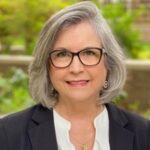
Ann McKinley joins BOW Team Member Kelly Arabie to aid us in being the friends, family and neighbors those affected by this diease need in order to show them the love of God.
For families, learning about dementia is crucial. For friends, it helps us treat others as we want to be treated if we eveh have to deal with dementia ourselves.
Resources
This episode is also available on video.
Podcast: Play in new window | Download (Duration: 23:00 — 14.4MB)
Subscribe: Apple Podcasts | Spotify | Amazon Music | Android | Podchaser | Podcast Index | TuneIn | Youtube Music | More
Timestamps:
00:21 Meeting Ann and her heart for dementia education02:19 What is dementia?
04:11 Signs and symptoms of Alzheimer’s
05:38 How should a family respond?
08:45 How does someone with dementia thrive?
13:45 What challenges do the families face?
15:38 How can we raise awareness?
19:55 Resources
Transcript
Kelly >> Welcome everyone to the Beyond Ordinary Women Podcast. I’m Kelly Arabie and today we are talking with Ann McKinley on Learning About Dementia. Ann works with the Juliet Fowler Communities in East Dallas, leading their citywide initiative, Dementia Friendly Dallas, committed to empowering those affected by dementia. Ann, welcome. So glad to have you here.
Ann >> Thank you so much, Kelly.
Kelly >> Tell us, how did you find yourself in this arena for ministry?
Ann >> Well, as you said, I work for Juliet Fowler. I’ve been in the senior living community for over 20 years. And so of course I have professional experiences with helping families. But it was through my own personal experiences that I found the Dementia Friendly Initiative.
I’m a daughter of dementia. Both of my parents had dementia and that did not preclude me. My professional experiences did not preclude me from being that daughter who was googling at night and looking for answers and responses.
We in our family really thought we had all our ducks in a row. My husband’s an attorney. I have a sister who’s a doctor, another sister who’s a nurse married to a doctor. So and I’m in the senior living business.
We thought we were prepared and had it all already. But dementia doesn’t follow your plan. And so I found Dementia Friendly America and recognized that that was something that could be helpful to our community. It made me realize that there were gaps in understanding and gaps in services that existed. And I felt like at some point in time, that was something that I wanted Juliet Fowler to get behind.
And so within a short time they did. And here we are.
Kelly >> So let’s talk a little bit, say more about the gaps in understanding. Could you help us understand a little bit what is dementia?
Ann >> Yes. Well dementia is a term. It’s an umbrella term that describes—not the diseases. It’s not the disease itself, but it’s an array of symptoms. The symptoms of cognitive function. So it’s not just memory loss. People think immediately of memory loss. But it’s not just memory loss. It can also be vision. It’s communication. It’s mobility. It’s depth perception.
It’s a lot of different things that are all managed by the brain. And so when a dementia impacts your brain, all of those functions are impacted as well eventually.
Kelly >> So say more maybe about the symptoms of dementia. Those are some broad.
Ann >> They are broad and there’s actually many medical conditions that can cause dementia. And so the first thing a person really should do is we have to be very honest and upfront with our own physician. When we start recognizing a difference in our own self, we need to have those conversations because there are reversible medical conditions that can create and can mimic dementia. So first you got to know what you’re dealing with.
Alzheimer’s is the most prevalent of the dementias. It’s actually they estimate 60 to 80% of your dementia falls in under the Alzheimer’s bracket. But some of the other dementias are frontotemporal, vascular dementia, Lewy body dementia and Parkinson’s can have a dementia aspect.
I’m going to speak to the signs and symptoms specifically of Alzheimer’s, because 60 to 80% of our diagnoses are attributed to Alzheimer’s disease.
I also want to point out that not everyone that receives the diagnoses is going to experience the same symptoms, and they don’t go in any specific order. So some of those symptoms might be memory loss, specifically recently learned information. So your short term memory loss, the inability to plan and execute or solve a problem. So our executive function can be inhibited.
Vision changes and not the type of vision changes that are cataracts or, you know, normal macular degeneration, not that type of thing. I’m talking about the inability to see depth perception, to distinguish colors, confusion about time and place, communication, having a problem remembering words, being able to string words together to create sentences, understanding what is being asked, and then the ability to respond.
So those are just some of the most common signs and symptoms of Alzheimer’s and of course, change in personality and behaviors. That’s something that some people experience as well.
Kelly >> So you’ve talked about various symptoms of dementia and the symptoms of Alzheimer’s. How can you know what you’re dealing with or what is a family in your experience? What does a family do when they see symptoms and they’re not really sure where to go?
Ann >> Well, I think the first thing you do is you talk to your primary care physician. A primary care physician needs to rule out anything that is medical beyond a diagnosis of a long term dementia, because medication mismanagement, depression can mimic dementia. There’s a lot of different things that can mimic dementia.
So your primary care physician is going to rule that out. They’re going to run the tests or do whatever is necessary to rule out something that’s treatable, something that’s reversible. Then they will refer you to a neuropsychologist who will do an entire array of tests. And the tests are first off, we don’t have, in my opinion, we don’t have enough neuropsychologists. And so it can take time to get in to see a neuropsychologist to do the testing and to get that very specific diagnosis.
And then your physician, the Alzheimer’s Association, Dementia Friendly Dallas, there’s a lot of resources. We are very fortunate that we live in a city that truly is rich with resources. And so the resources are there. Dementia Friendly Dallas is trying to do is bring an awareness to our community.
It’s not about when are you going to be impacted or when will dementia stand in front of you. It already is. It’s all around us. It’s in our businesses, it’s in the grocery stores, it’s in our neighborhoods. It’s walking down the street, you know, it’s in the pews of our church. So we as community members are called to to be friends, to be dementia friends. And that’s what the Dementia Friendly Dallas movement is about. We our goal is for our city to be a place where people can live, age and thrive.
And we don’t usually equate dementia and thriving. You don’t. We don’t think about that. A person who has a dementia diagnoses can live with dementia up to 20 years. I mean, there are people are known to have it for 20 years. And that’s a big chunk of our life. So that’s why it’s really important that we with healthier brains can recognize and have the tools and know how to adapt for that person who can adapt.
Their brain won’t let them adapt. They don’t have the ability to change what they do and what they say and how they’re acting and what’s happening to them.
And it’s kind of like when you go bowling and they put those bumpers, you know, to help get the ball down. The, you know, so you don’t gutter your ball.
We’re the bumpers. We’re the bumpers for people with dementia.
Kelly >> How does someone thrive with dementia?
Ann >> Great question. We participated in a panel several years ago of spouses with all the spouses that were care partners were working, and all the spouses with dementia were younger. And we asked them, what do you need the most?
And they said, “We need things to do. We need our friends. We need opportunities to have purpose. We need opportunities to volunteer. Our lives are not over, and we still want to live productive, thriving lives.”
We believe there’s such a stigma associated with this disease, that’s what isolates people. People become isolated due to the lack of knowledge on the parts of the rest of this community. And also because there’s such a stigma, people hide themselves. They’re not as open to share with their friends.
I’ve seen this happen in multiple ways, and I think the person that thrives is the person that lets their community, lets their tribe know. “I’ve had this diagnosis. This is what I’m experiencing.” And you’re really walking it with that person. And the more open a family can be and a more open the person that’s received the diagnosis, the more open they are with their community, I think the better they’re going to thrive.
But purposeful interactions. It really saddens me when I hear that friends no longer invite them to parties because I don’t know how the person with dementia is going to act. Or they’re no longer invited to play golf because they can’t fully they can’t count all their strokes, whatever, you know.
Being the friend that recognizes and anticipates and recognizes that this is a disease.
You know, it’s let me put it another way. This is like an invisible disease. You can’t look at a person with dementia and know they have dementia. You can look at a person with cancer and notice that they’ve lost their hair. You can look at a person that has got a brace or, you know.
There’s so many other things that you can see and this one you can’t see. It’s so gradual and it happens over a long period of time that people just withdraw from associating because I don’t know what to do and say. So it’s just easier to not be there.
We’re challenging people to be there, to be there. This is a culture change.
Kelly >> To be present.
Ann >> To be present, to maintain the community. And that’s how a person thrives.
I know for my in my own circumstances, my dad was a volunteer. He was an active volunteer. And so we had to find ways for him to volunteer. And because we understood that a person with dementia can maintain procedural memory, we thought of ways that we could tap procedural memory.
So he had been a volunteer at the VA hospital for years and years, and he would clean and repair wheelchairs. So when he was in the senior community, the rehab department would bring my dad down and let him—and please know that they could have cleaned those wheelchairs in ten minutes had been done—but they took the time to bring him down and let him work with them to clean the wheelchairs and test the wheelchairs.
And that took twice, if not, you know, triple the time for them to do that. But that was very important to him. It fed his soul. It fed who he was.
Kelly >> Efficiency and time are not God’s highest priorities.
Ann >> They are not. They are not.
Kelly >> Yeah.
Ann >> And then we realized that that was beyond his scope. So then we started stuffing bags for the homeless shelter because Dad could sort and he could very methodically get the toothpaste, the toothbrush, the soap, you know, whatever. Put it in the Ziploc bag, seal the Ziploc bag, you know, and he would sit there for hours because he had purpose. We put purpose in his day.
So remembering that a person with dementia can’t just sit there and look at a TV and watch movies.
Kelly >> Right.
Ann >> Right. That interaction, that social interaction, and in fact, the social interaction helps preserve the brain.
Kelly >> Absolutely. Yes. Yes.
Ann >> God made us to be in community.
Kelly >> Yes he did.
Ann >> He made us to be in community.
Kelly >>And that doesn’t end. That doesn’t end when disease impacts us.
Ann >> That’s right.
Kelly >> There are many challenges that a family faces when they’re impacted by a loved one who has dementia. And there are many challenges that the individual faces themselves. You know, so much loss. What have you seen in either your experience or the experiences of those you’ve worked with? Particular challenges that we should just be aware of?
Ann >> Well, your care partners need an outlet. They need support. They need friends that really check in on them, that don’t just say, Well, let me know what I can do to help,” but are very specific with their needs. I read a book years ago about dementia in the church, and a man described said that he and his wife were classified as a shut-in.
“And in fact,” he said, “we’re not shut in, were shut out.”
And he spoke about the actions that their specific Sunday School class took to help and to support, all because one person noticed their absence. So being aware of the people that are no longer sitting next to us in the pews, being aware that someone is not there, being very persistent and active with the needs, and recognizing and calling people that we know haven’t been in church for a while.
Keeping people safe and welcome is our ultimate responsibility, and these small acts of hospitality make an enormous difference.
Kelly >> Yeah, I’d love to have a conversation about what the church can do to support dementia. It sounds like there are a lot of opportunities and perhaps we can come back and have a conversation about that a little bit later.
Ann >> That would be wonderful.
Kelly >> What else would you like our audience to know about dementia and people who you know they love who are impacted by this? There’s just there is a deep lack of awareness, as you’ve no doubt encountered in people just not understanding what the diseases are. And I mean, I’m just learning from you that there’s more to it than just Alzheimer’s.
Ann >> Dementia Friendly Dallas does a one hour session. It’s called Become a Dementia Friend. And in this dementia friends’ session, we talk about the ten signs and symptoms. We talk about how two parts of the brain interact and engage the amygdala as managing our emotions. And our hippocampus manages the facts and figures of our life. And how those interact and engage. How when the hippocampus gets hit with dementia, it becomes very confusing to a person with dementia because they’re holding on to feelings and they don’t have anything to relate it to.
And then we spend a good bit of time with communication. We want people to take what we teach. It’s just one hour but we jam pack that with some very useful tools so that people can be in the community. When we’re giving people the ten signs and symptoms that speak for a couple of different reasons, we want people to be able to recognize that the person that they’re speaking with may have dementia.
We’re not trying to diagnose a person. It’s just to have an awareness. This person may have dementia. I may need to use a tool that I that I have in my tool belt. We also want people to increase their empathy and to have an understanding that this is a disease and this is what this person is experiencing.
And when we have that knowledge, we approach people differently. We change our expectations. It’s important that we change our expectations of the people that we are interacting with when we recognize that they have dementia.
And so through this one hour course, we are creating dementia friends, and we really believe that we are going to change this world one friend at a time.
Kelly >> I love that, I love that. That’s beautiful. Is there anything else that you would like to share about Dementia Friendly and your goal? How to register for your education?
Ann >> Yes, we have a website. It’s DFDallas.org and so you can learn more about what our Dementia Friend initiative is. We have a dementia friendly business initiative. So and we have a dementia friendly faith community initiative. And we have another initiative that is called Dementia Friendly Engage. And Dementia Friendly Engage came about really after the pandemic because prior to the pandemic, there were many opportunities for engagement for people with dementia.
And throughout the pandemic, like everything else, they shut down and they didn’t come back. So we felt it was really important for us to shine a light on those opportunities. And we have toolkits available for people to create memory cafes. We have mentors that can help start a respite program. So personally, I believe if you are breathing, you should be a dementia friend.
So that’s all I do is right. Everyone should have this knowledge. If it’s not in front of you right now, it will be. And children are amazing with people with dementia, so we shouldn’t shy away from exposing our children and giving our children the opportunity to nurture and to shine. The intergenerational component is so important.
And then if you are any type of business or organization that’s engaging the public, you should be dementia friendly. There are things even senior communities have recognized things that they can do to modify, whether it’s their environment or, you know, a practice that they’re using and really have people in the room that say, wait a minute, is this dementia friendly?
Because if it’s dementia friendly, if it’s good for a person with dementia, it’s good for everyone.
Kelly >> Yes.
Ann >> So DFDallas.org is how you learn more about dementia friendly. You can. We’ve got a calendar online where you can see our upcoming education. We do virtual sessions. We have in-person sessions that are routinely scheduled, and then you can schedule one for your specific group or business or faith community.
Kelly >> Okay. Okay. So how would somebody connect with you if they’re not in the Dallas-Fort Worth area?
Ann >> Well, they can always reach out to me, and I can help direct them. But there’s another website, DFAmerica.org, and that’s Dementia Friendly America. There is an entire list of communities throughout the country. Almost every single state in our country has some presence of dementia friend and dementia friendly initiatives, and so they can reach out and find a person in their state that can help them.
And if it is not there, be the person that starts it. Be the leader that wants to pull this together for your community.
Kelly >> Yeah.
Ann >> At Juliet Fowler we have a care philosophy that’s called I’m Still Here. And it’s just a reminder for all of us that the person that we love and the person that we know is really still there. And while they may forget our name and they may forget some very specific details, that love that they have in their heart is still there.
That person, if that person was a musician, they’re still a musician. They still love music. And so when we can remember that that person is still there, we need to continue to tap in and treat them with the dignity and the respect that we’ve always treated them with.
Kelly >> Yeah. Yeah.
Well, thank you, Ann, for being with us. This has been so helpful, and I look forward to having you back and talking again about ways that we can minister to families with dementia or those with dementia, how the church can do a good job about coming alongside and loving well.
Thank you for being here.
Ann >> Thank you so much.
Kelly >> And we’d love to direct our audience to BeyondOrdinaryWomen.org. You can find more resources on caring well. Go to the Resources tab on our dropdown menu and select Caring Well. You can find other podcasts and videos that are able to support you in caring well for others.
Thank you for joining us.
